
38 hoists, one button, six shows a week
38 stage hoists on one button, six shows a week, no counterweights.
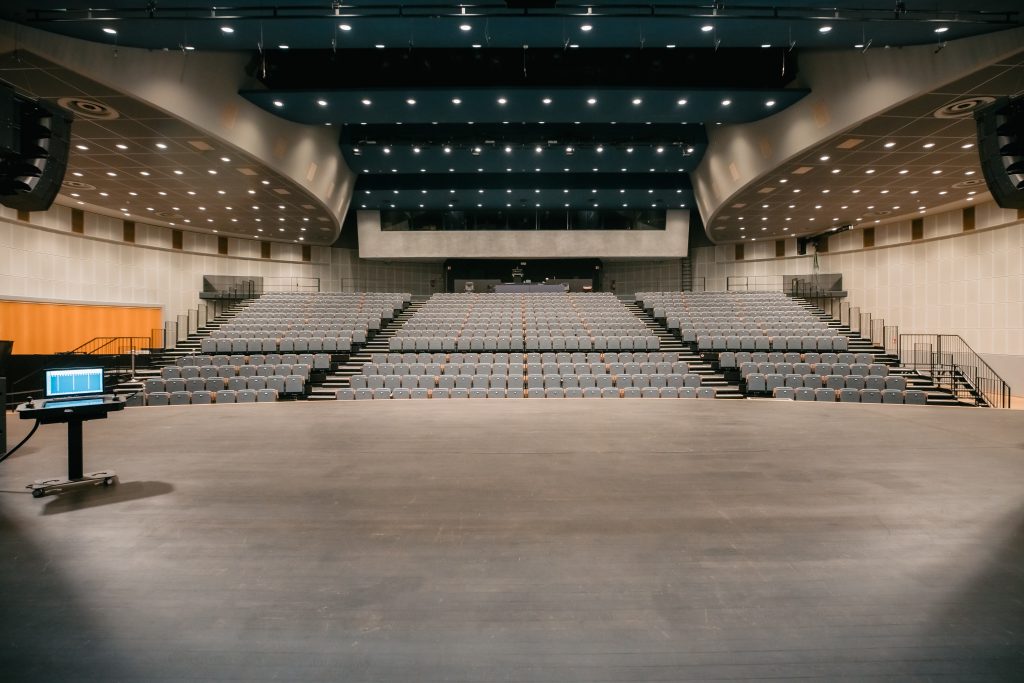
- Every hoist raised and lowered at the press of a button, at double the previous load capacity
- No more manual counterweighting before and after each show
- One control system now running reliably in 15 theatre halls
- Two dedicated control views, matched to each hall's own stage orientation
The challenge
Before automation, moving De Velinx's stage rigging meant a technical crew pulling counterweighted battens up and down by hand, every lamp or piece of scenery matched with a counterweight, rebuilt before each show and torn down after it, roughly six times a week. The system also had to work for visiting technicians who don't know the venue, and the theatre's two performance halls face different directions, so a single fixed control view never showed the whole stage.
What we did
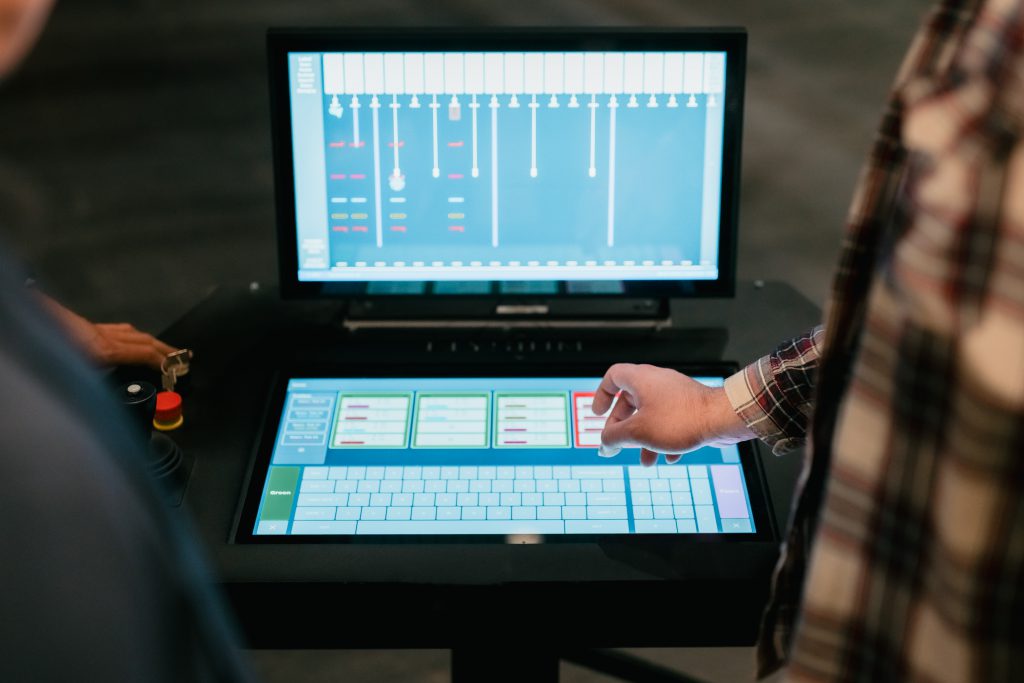
We built an open, redundant control system on industrial-grade PLC hardware: one controller running the motion for all 38 hoists, with signals and safety wired over a single redundant network so a fault in one loop doesn't take the rest down. Two separate control panels match the two halls' different stage orientations, so the crew always has a full view of what they're moving, whichever hall is in use.
How we delivered it
The system has gone through several iterations with Stapotech, adding features while keeping it stable and reliable enough to run six shows a week without incident. Hoists no longer need to be linked mechanically: grouping and height limits are handled entirely in software, so the crew can't accidentally damage the set while operating it.
How the rigging is controlled
Every hoist is really a small machine: a winch, a motor, and the sensors and safety logic that keep it in bounds. Here's how those 38 machines become one system a single crew member can run.
Technical detail
One industrial PLC runs the motion for the entire system, sequencing all 38 hoists so they move in the right order and can be corrected quickly if a cue changes. A separate safety-rated controller handles every safety signal independently of the motion logic, and both travel over the same redundant network, built as two loops, so a single connection fault doesn't take the system down. The architecture is open by design: no fixed motor brand or fieldbus, so it isn't locked to one supplier as the system grows or changes.
In daily use
The crew operates from whichever of the two control panels matches the hall in use, always with a full view of the stage they're actually moving. Hoists that used to need mechanical coupling can now be grouped and limited entirely in software (including height limits that stop a hoist before it can damage the set), so day-to-day operation stays simple even as the system's capabilities have grown.

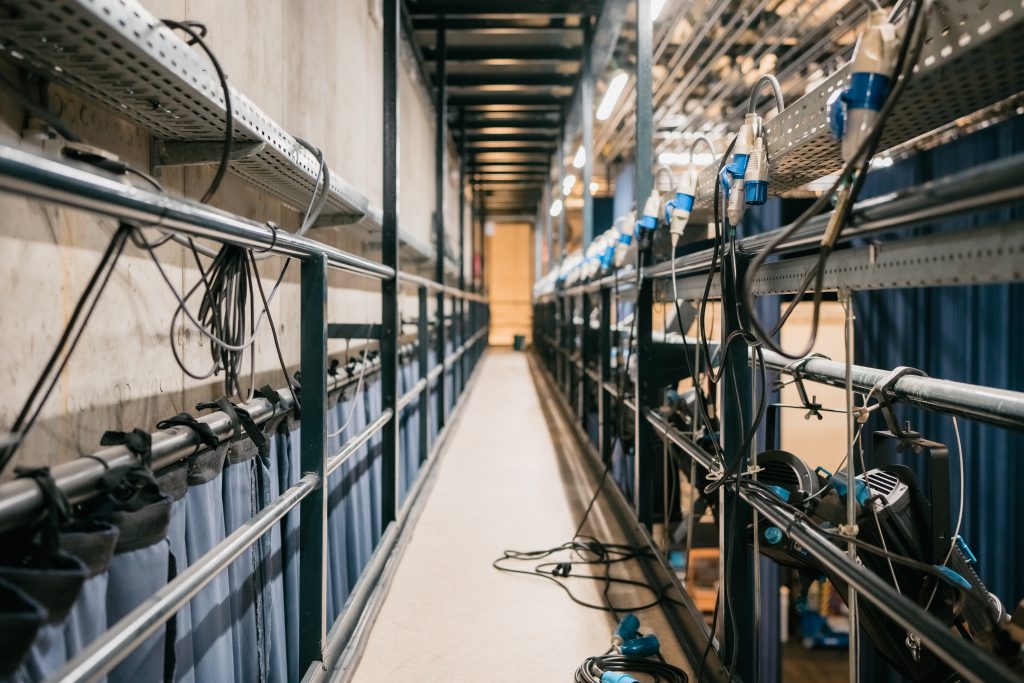
We used to pull everything up and down by hand, twenty counterweights at a time, before and after every show. Today we just press a button, and we can carry twice the load. It's a huge step forward, in time and in safety. Nobody wants to go back.
- De Velinx

More projects
-
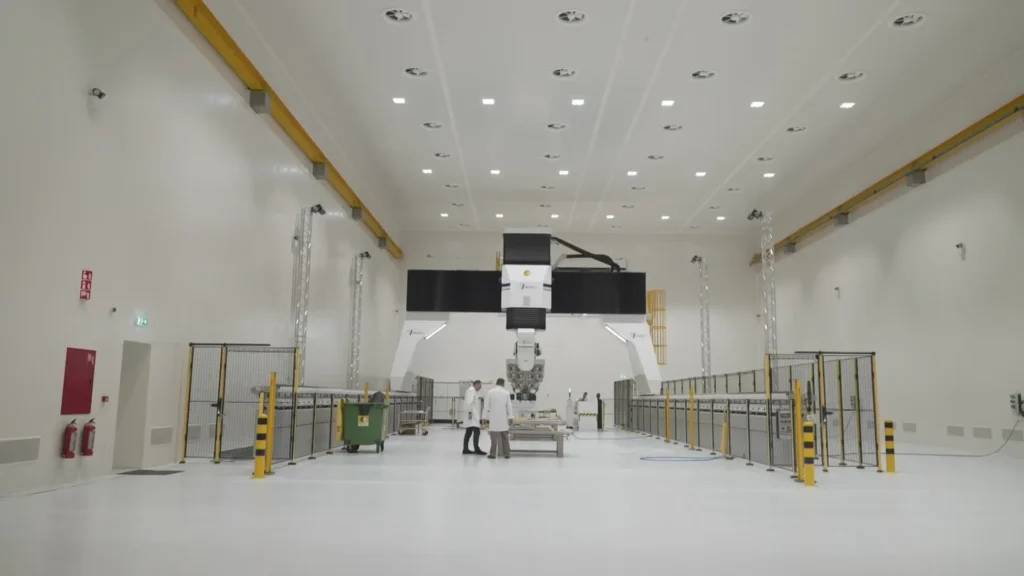
SABCA
From machine to model
Machine, environment and inspection data joined in one neutral platform, so a process anomaly shows up during layup, not at final inspection.
See the project -
ConstrucThor
Real answers for climate-neutral renovation at a unique living lab
Full automatic control across three renovation typologies, with every parameter overridable by hand.
See the project -
Genteq
Four batteries, one power plant
An 8 MW battery park on the medium-voltage grid, steered by its energy supplier within the limits Fluvius sets.
See the project