


Voltaq · Performant Industries · Hasselt, Belgium
Four batteries, one power plant
An 8 MW battery park on the medium-voltage grid, steered by its energy supplier within the limits Fluvius sets.
The project
8 MW, one control layer
How Boolean turned four independent Huawei battery systems into a single plant that an energy supplier can steer and the grid operator can trust.
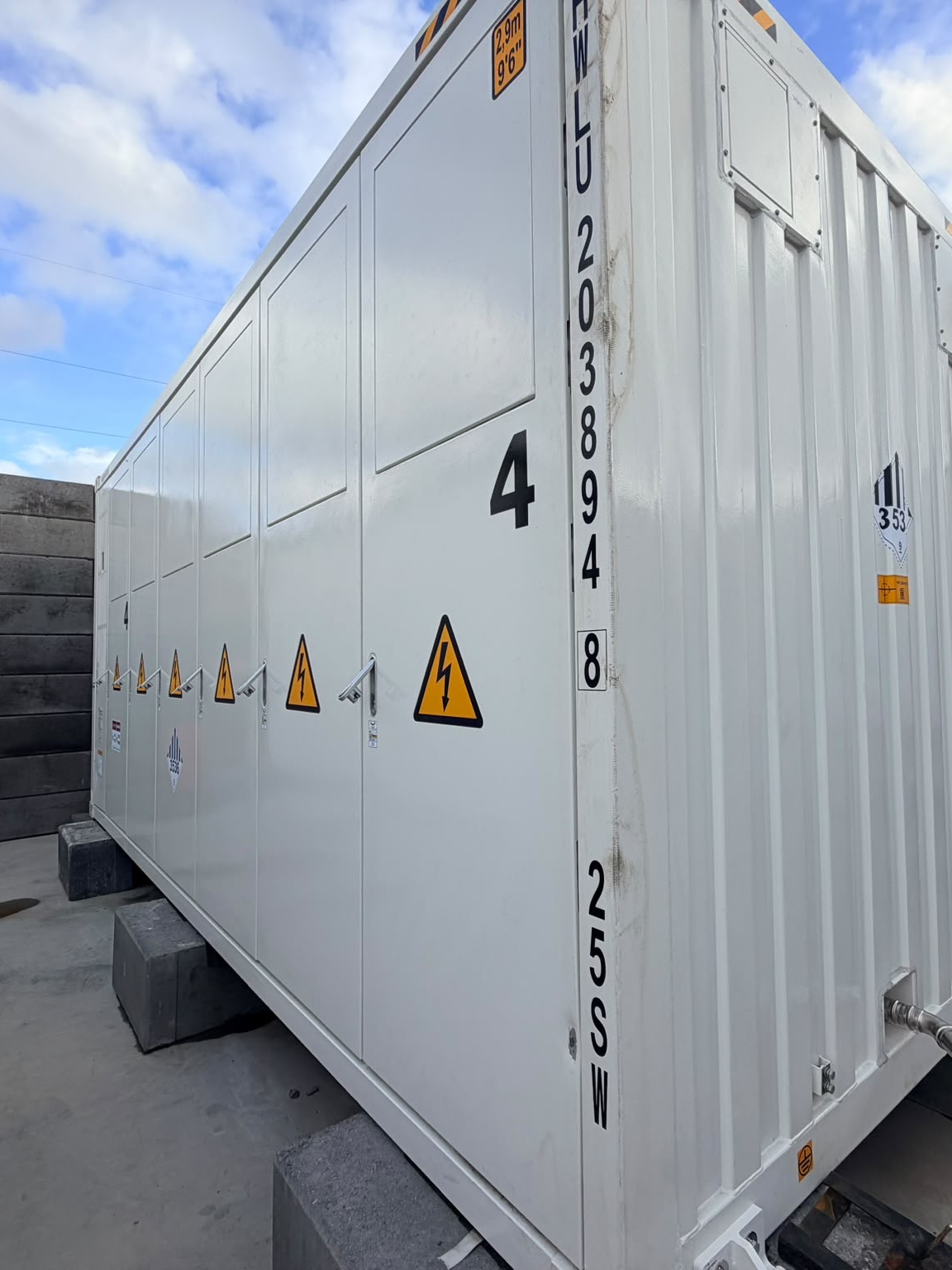
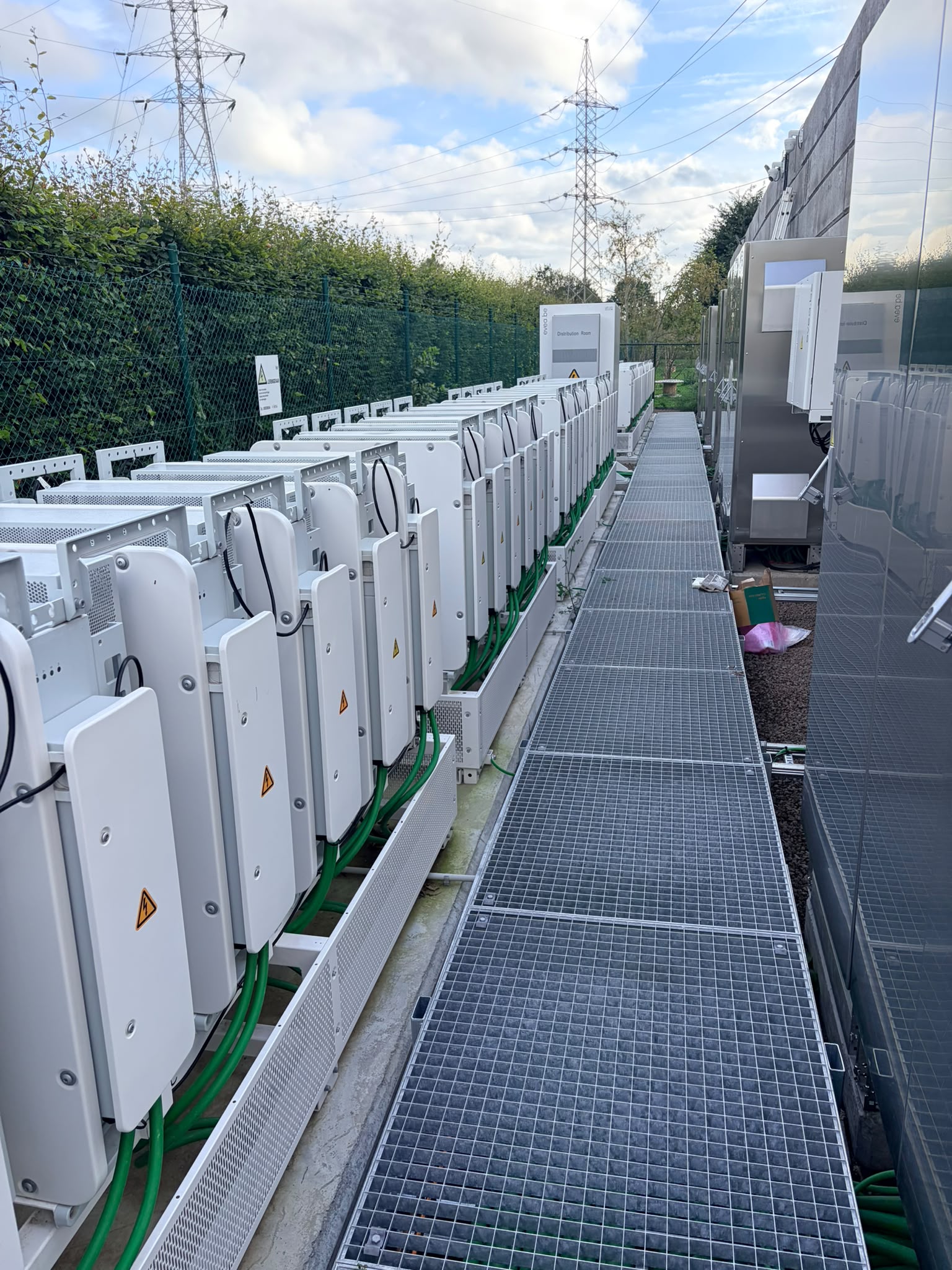
Voltaq's battery park near Hasselt connects 8 MW and 18 MWh of storage to the medium-voltage grid, built as four separate Huawei systems, each on its own transformer. On its own, the Huawei controller only supports self-consumption and time-of-use schedules. Trading on the energy market needs an energy management system on top: one that takes setpoints from the energy supplier, respects the limits the grid operator sends, and presents four systems as one. A park of this size also matters to the substation it is connected to, so it needs serious security. Cutting it off from the outside world was never an option, because it has to keep talking to Fluvius and the energy supplier.
Result
What we did
We built the EMS on a Beckhoff PLC as the layer between all parties. It reads the four Huawei SmartLoggers over Modbus TCP, receives the energy supplier's charge and discharge setpoints over Modbus TCP, follows Fluvius' limits on injection and reactive power over IEC 60870-5-104, and reads the medium-voltage switchgear and meter over IEC 61850. Every battery is included or excluded by rule: is it online, free of blocking faults, healthy enough, and is its transformer within temperature limits? The EMS derates each one on state of health, cycle count and transformer temperature, and reports the real available power and energy back to the energy supplier. A setpoint that exceeds what the plant can deliver is limited and raises an alarm.
How we delivered it
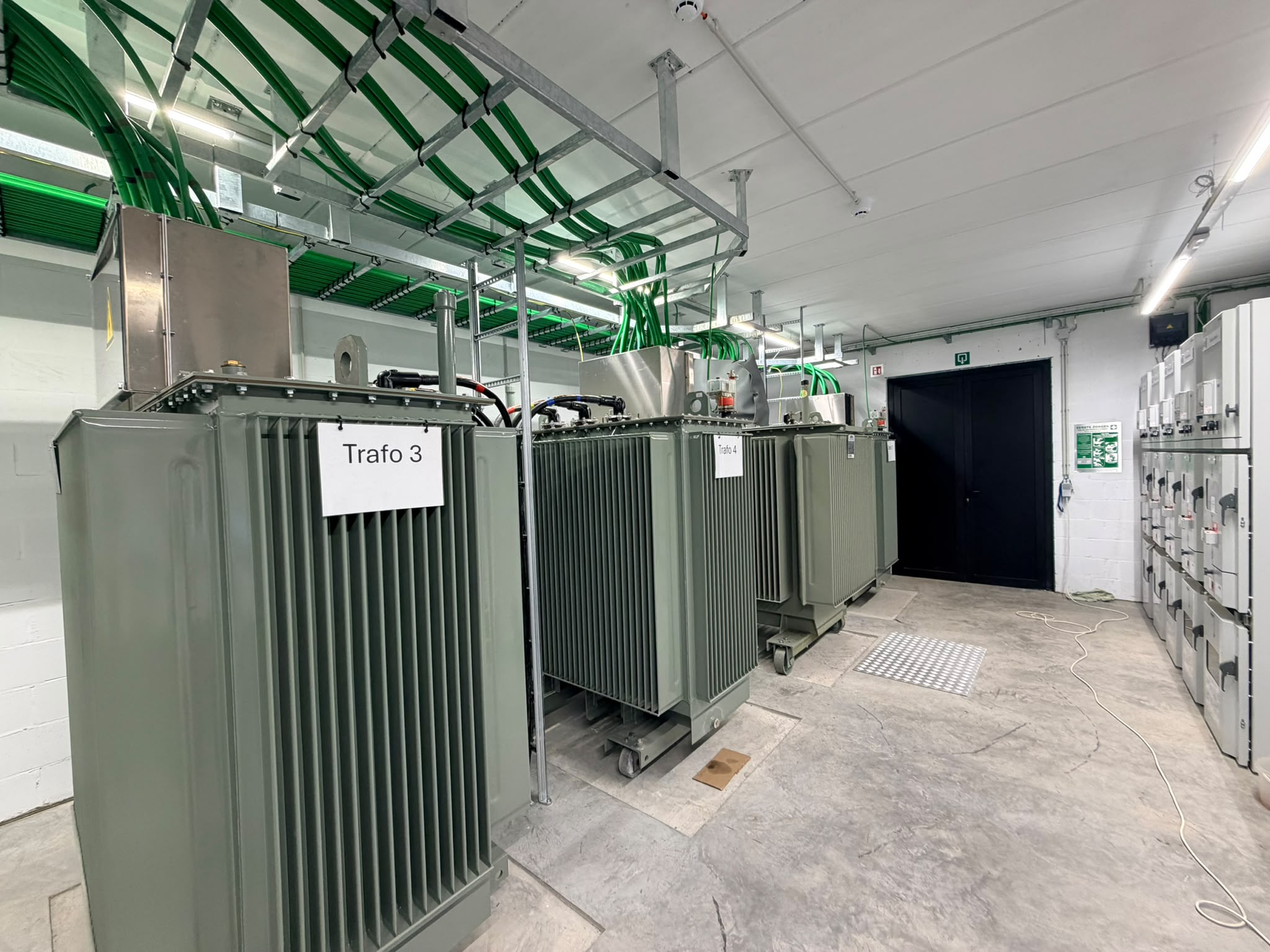
Security came first. Every party sits in its own network zone behind a Fortinet firewall with OT security services, and traffic between zones is filtered. Two internet connections run in failover, tested on site, and remote access runs through its own secured network zone. The same controller also runs the building side of the park: ventilation of the transformer rooms based on transformer temperature, monitoring of six electrical cabinets for temperature, fire, VOC and dew point, insulation monitoring on the IT network, and the status of every circuit breaker. The facility manager gets one dashboard to follow the plant, take a battery out of service for maintenance, and receive alarms by mail.
In detail
How four batteries become one plant
What sits between an energy supplier's setpoint and four battery systems, and what the facility manager sees day to day.
Technical detail
One Beckhoff PLC is the meeting point for four protocols. Huawei's SmartLoggers handle the low-level control of their own inverters and battery modules, and the EMS talks to them at a high level, one controller per system. The energy supplier connects as a Modbus client and receives status in return: ready to charge or discharge, available power, capacity and energy content, all recalculated the moment a battery drops out. Fluvius limits the plant through IEC 60870-5-104, and every device keeps time from the same NTP source so all of them agree on when a command was given. The state of charge Huawei reports is gross, so the EMS applies a configurable derating before passing a net figure on.
In daily use
Day to day, the park does two jobs at once. It charges and discharges to help balance the grid, on setpoints from the energy supplier, and on Fluvius' request it supports grid quality by delivering the reactive power Fluvius asks for. The plant runs on its own. The facility manager follows it through the HMI, takes a system out of service for maintenance with a single switch, and is alerted by mail when something needs attention. Fire detection, cabinet climate and transformer temperatures all report to the same screen, so the whole site is visible in one place.
Running a battery park, or planning one?
We connect the batteries, the grid operator and the energy supplier into one plant you can steer. Let's look at yours.